Leak Detection and Seal Integrity Testing: Avoiding Product Loss
The packaging looked fine when it left production.
Three days later, trays started swelling in cold storage. Oxygen levels had drifted higher than expected. Shelf life dropped short of target and the customer rejected the batch.
The problem was not the recipe. It was a leaking seal on one packaging lane that only started failing halfway through the shift.
That sort of issue is common in food production. A seal jaw wears down. A guide rail moves slightly out of alignment. Someone changes film rolls during a busy run and the sealing pressure is not quite right afterwards. Nobody notices immediately because the packs still look acceptable coming off the line.
This is why leak detection for packaging matters in food processing and modified atmosphere packaging environments. Small leaks create expensive problems long before anyone can see them.
Why leak detection for packaging matters in MAP production
Modified atmosphere packaging only works if the atmosphere stays stable after sealing.
If oxygen slowly enters the pack, or carbon dioxide escapes too quickly, shelf life can collapse days earlier than expected. Fresh meat discolours faster. Salad products deteriorate. Coffee loses freshness. Snack foods lose texture.
The difficult part is that many failed packs still pass visual inspection.
A tray can seal well enough to leave production, then start leaking during transport or cold storage. That is why food manufacturers rely on testing methods that can identify leaks too small to see with the naked eye.
In many facilities, leak testing becomes part of day to day process control, not just a QA exercise.
Teams use it to monitor:
Seal consistency across production runs
Gas retention in MAP products
Packaging variation between shifts
Film and tray compatibility
Changes after maintenance or tooling replacement
Without proper testing, operators often start chasing the wrong problem. Gas mixers get adjusted. Fill weights change. Product recipes get reviewed. Meanwhile the actual fault is a worn seal jaw or a small channel leak in the packaging seam.

For facilities running modified atmosphere packaging systems, tools like the MAP Check 3 gas analyser and CheckPoint 4 gas analyser help production teams verify oxygen and carbon dioxide levels directly on the line.
Seal integrity testing helps catch problems before product leaves the site
Most packaging failures start small.
A tiny wrinkle in the sealing area. A contaminated seal edge. Slight temperature drift on one lane. Sometimes it only affects one pack in fifty.
That is enough.
In high volume food production, even a small percentage of leaking packs can create major waste over time.
We regularly see problems like:
Packs passing QA on the line, then blowing up in cold storage two days later
Nitrogen flushed snack packs going soft before expiry
Prepared meals leaking around tray corners after transport
Meat packs losing gas balance during distribution
Coffee packaging pulling in air through weak seals overnight
This is where seal integrity testing becomes valuable.
Instead of waiting for customer complaints or retailer returns, production teams can identify packaging drift while the line is still running.
Depending on the application, testing may involve vacuum decay testing, burst testing, gas analysis, or offline leak verification methods. The right method depends on the product, packaging format, and production conditions.
A rigid protein tray behaves very differently to flexible coffee packaging or powdered products. Testing needs to match the real production environment.
Systems like the Lippke 5000 seal integrity tester and LeakPointer 3 leak detector are commonly used for seal integrity testing and packaging leak verification across food manufacturing environments.
Shelf life measurement only works if the packaging stays stable
Shelf life testing can produce excellent results in controlled conditions. Then production starts and the numbers change.
That usually happens when packaging consistency changes across shifts or production runs.
A product tested at 21 days shelf life in development may only last 14 days in real distribution conditions if seals are inconsistent or gas retention drops during transport.
This becomes a serious issue for products travelling long distances across Australia, especially in chilled distribution environments.
Shelf life measurement depends on stable packaging conditions from batch to batch. If packaging integrity changes halfway through production, the shelf life data becomes unreliable.
That creates pressure everywhere:
QA teams dealing with failed retention samples
Production managers chasing waste reduction targets
Maintenance teams trying to diagnose intermittent faults
Retailers questioning expiry performance
Without reliable packaging data, everybody starts blaming something different.
The Food and Beverage industry page covers more examples of how industrial measurement systems support packaging quality, shelf life stability, and production consistency in food manufacturing.
Water activity measurement and packaging performance go together
Moisture movement inside packaging causes problems fast.
A leaking package does not just affect gas concentration. It can also change humidity conditions around the product, especially in dry foods or moisture sensitive products.
That is why water activity measurement is often tied closely to packaging quality control.
In snack food production, even small moisture changes can affect texture and shelf stability. Powder products may start clumping. Crispy products lose crunch. Mould growth risk increases.
We often see food manufacturers monitor both water activity measurement and packaging integrity together because the results influence each other.
A leaking seal can allow humidity changes that slowly affect product quality long before the package visibly fails.
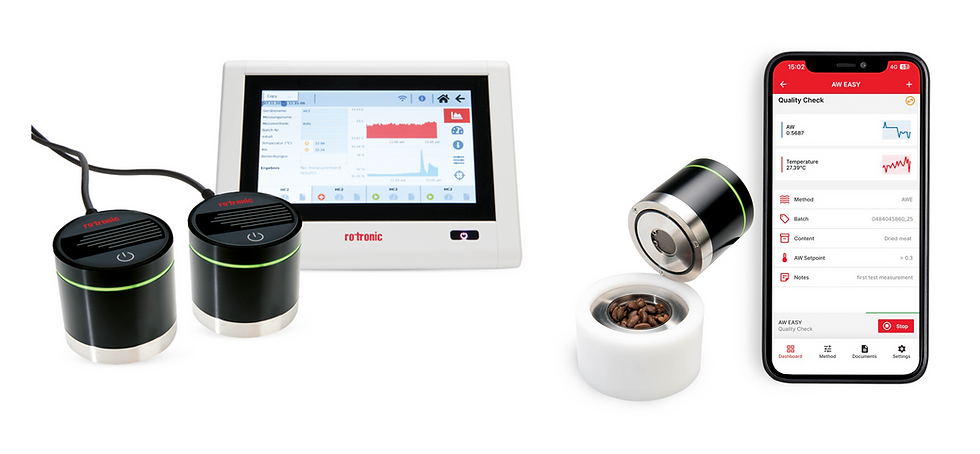
Equipment like the Rotronic HygroLab water activity analyser and Rotronic AW Easy helps manufacturers monitor water activity levels more accurately during shelf life testing and quality control programs.
For broader guidance around shelf life and packaging validation, the Australian Institute of Food Science and Technology provides useful industry resources and technical information for food manufacturers.
Leak detection for packaging also reduces downtime
Packaging faults rarely stay isolated to packaging.
Once reject rates increase, production slows down quickly. Operators start checking seals manually. QA isolates pallets for inspection. Maintenance gets called to the line. Shift supervisors start adjusting machine settings trying to stabilise results.
Now everyone is under pressure.
Reliable testing helps plants react earlier, before the issue spreads across multiple batches or reaches distribution.
This matters even more in facilities running:
Multiple packaging formats
Frequent product changeovers
High speed MAP lines
Export products with tight shelf-life requirements
Large supermarket supply contracts
In many plants, a single packaging fault can waste an entire production shift if it is not identified early enough.
Technical support matters just as much as the instrument itself
Buying the instrument is usually the easy part.
The harder part is applying it properly inside a real production environment where packaging lines move fast and operating conditions constantly change.
A leak testing setup that works perfectly during commissioning may behave differently six months later after tooling wear, film changes, maintenance adjustments, or higher production speeds.
That is why ongoing support matters.
Most sites do not want five different suppliers blaming each other when product starts failing shelf life tests.
They want practical answers quickly.
At Pryde Measurement, we support industrial food and packaging operations with instrumentation, calibration, leak testing support, and ongoing technical service across Australia.
That includes support for:
Leak detection and seal integrity testing
Gas analysis and MAP verification
Shelf-life measurement support
Water activity measurement
Calibration and planned maintenance programs
You can learn more about Pryde’s calibration services, measurement services, and ongoing maintenance support for industrial packaging and food production environments.
Final thoughts
Packaging failures are rarely obvious at the start.
A weak seal on night shift. Slight oxygen drift during production. A tray corner that starts leaking during transport. Small problems become expensive very quickly once a product leaves the site.
Leak detection for packaging helps manufacturers identify those problems early, before they turn into waste, failed shelf-life targets, customer complaints, or downtime on the production floor.
If your team is reviewing seal integrity testing, shelf-life measurement, or MAP packaging performance, Pryde Measurement can help with instrumentation, calibration, and technical support suited to industrial food production environments across Australia.


Comments